According to Baseball Reference, 54 players have worn the number 12 in Tigers franchise history. Casey Mize currently wears it. Let’s look at a few Tigers that wore number 12 during the Fungo’s focus, 1977 through 1994:
The Tigers are rained out yet again in the first six weeks. Seattle comes to town for three starting tomorrow.
Record: 26-5, 7.5 games up
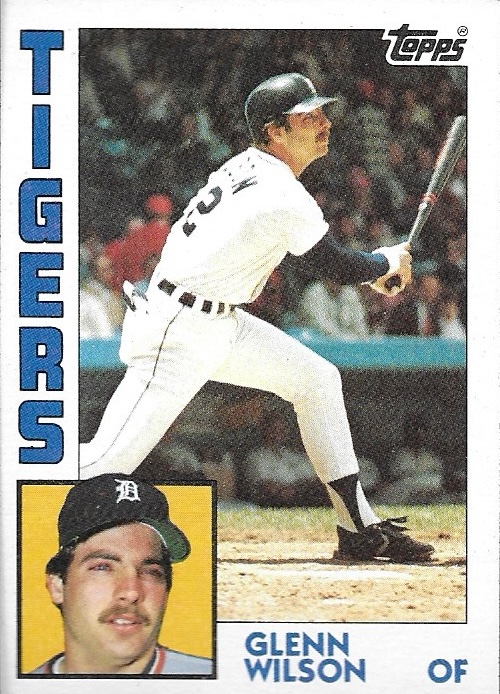
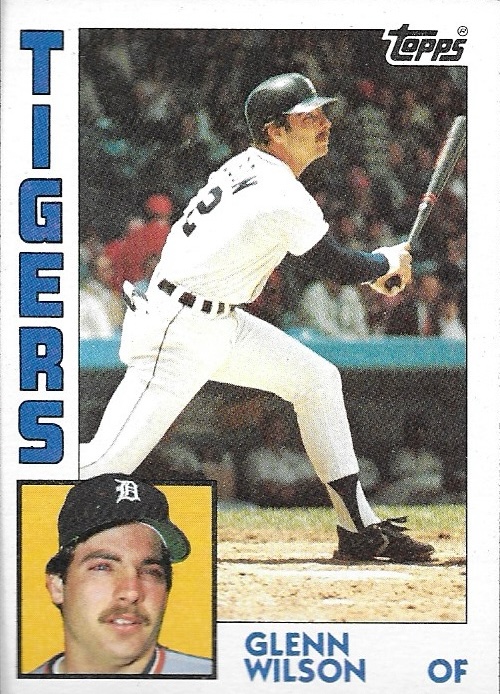
Glenn Wilson #12
A torrid start in Evansville led to Glenn Wilson‘s promotion to the Tigers in time for the Tigers on Opening Day in Detroit, April 15, 1982, against the Blue Jays.
Just two years earlier Wilson was a Tigers first-round pick, 18th overall, out of Sam Houston State University in Texas.
Wilson entered the ’82 home opener in the bottom of the eighth pinch-hitting for DH Jerry Turner. Facing Jays’ reliever Jerry Garvin, he stuck out looking.
The next day, Wilson collected his first major-league hit the next day against Ron Guidry, leading off the ninth with a double to left center.
Wilson made the most of his opportunity, hitting .467 in his first six games, and playing excellent defense in the outfield. Thanks to his hot start, he stuck with the Tigers until early May when he was sent back to Evansville only to return in July.
Wilson ended up playing in 84 big-league games that season, 80 of them in centerfield, and finished at .292 with 12 home runs.
In 1983 the Tigers were depending on Wilson to maintain the pace he began in his rookie season. He shifted from centerfield to right, allowing Chet Lemon to take over his natural position. Wilson appeared in 144 games that year and hit .268 with 11 HR and 64 RBI.
The Tigers saw him as a key piece of the puzzle heading into 1984. But the Tigers were determined to make Kirk Gibson their regular right fielder in ’84 which complicated the outfield picture and likely meant Wilson was a man without a position.
On March 24, the Tigers sent Wilson and John Wockenfuss to the Phillies for Willie Hernandez and Dave Bergman. Wilson spent four seasons with the Phillies and was named to the National League All-Star team in 1985. He finished the season with a .275 average, 14 home runs and 102 RBI.
With stops in Seattle, Pittsburgh and his hometown Astros, Wilson had a solid 10-year major-league career. His place in Tigers lore is set, if only as a player traded away on the eve of a magical season.
I for one enjoyed watching him play in Detroit — he was one of my favorite players — and wish he’d hung around a bit longer.
Birthdays
Happy Birthday to the late, old-time Tigers: Alex Main (1914 Tigers), Jimmy Archer (1907 Tigers) and Jack Burns (1903-04 Tigers)
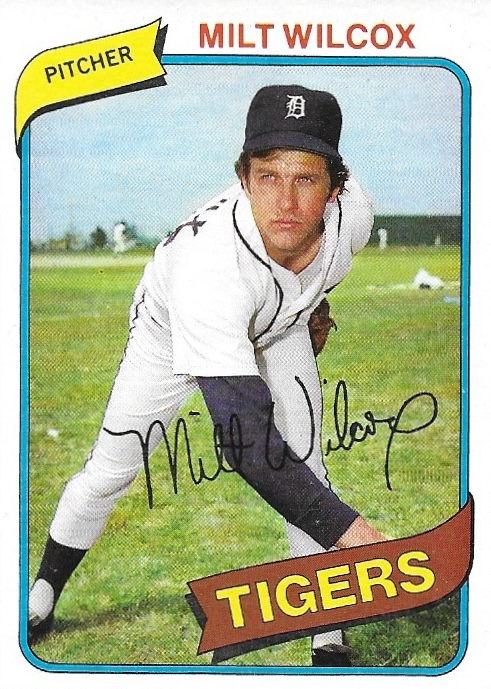
Milt Wilcox celebrated his 34th birthday with a solid outing: eight innings, eight hits, three walks three strikeouts and just two runs: a second-inning, two-run homer to Ron Kittle.
Floyd Bannister was just as good for the White Sox: 6.1 innings, eight hits and two earned runs.
Umpires: HP – Joe Brinkman, 1B – Larry McCoy, 2B – Nick Bremigan, 3B – Vic Voltaggio
Time of Game: 2:36
Attendance: 33,554
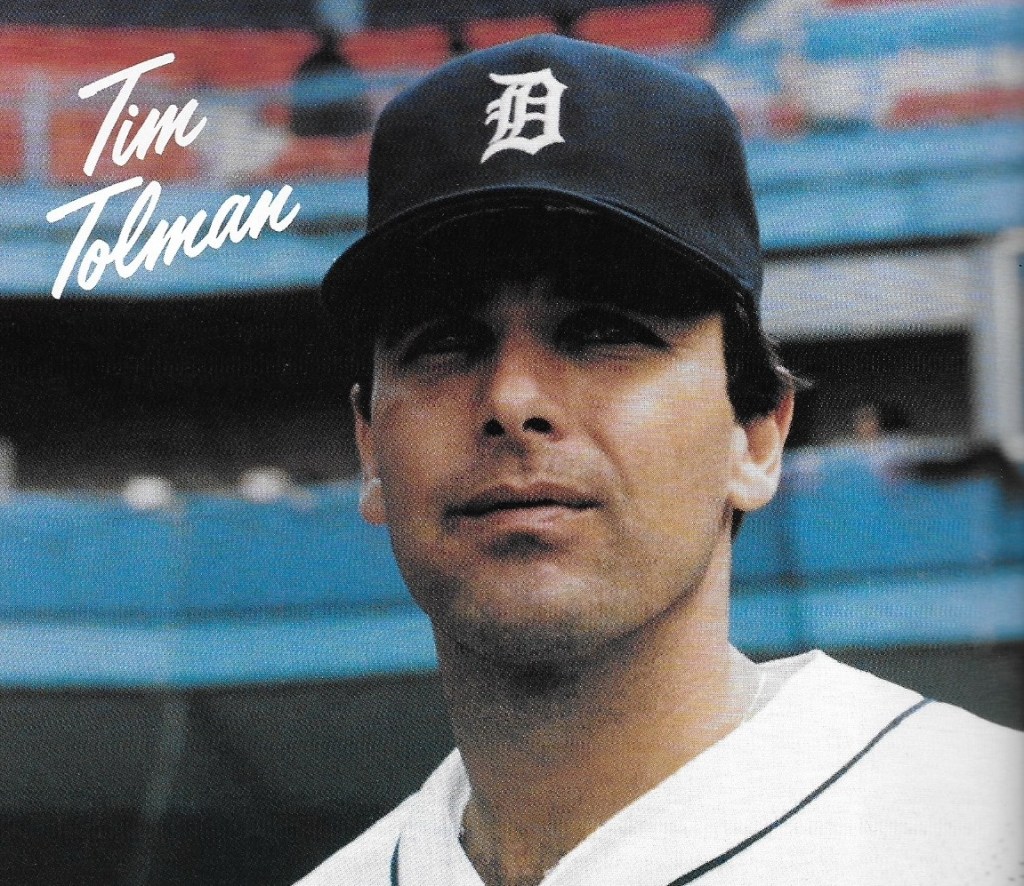
5 Things to Know About Tim Tolman – #38
The Tigers signed the right-handed hitting outfielder/first baseman Tim Tolman* as free agent on Feb. 10, 1986.
After hitting .298 with 11 home runs and 71 RBI (.812 OPS) at Triple A Nashville, Tolman was a September call-up in 1986. He played almost every day — appearing in 16 games from Sept. 7 to Oct. 4 — and batted .186 with six hits in 34 plate appearances.
In 1987, Tolman started the season at Triple A Toledo and hit .314 / 14 homers / 30 doubles and a .919 OPS. He was called up in July and played in nine games, hitting .083 — one hit in 21 plate appearances.
Lately I’ve been giving a lot of thought to who my all-time favorite Tigers are and who would make a tidy list.
Putting together my top 10 would be easy. Narrowing it to just five would be tough but I wanted to give it a shot.
What’s the criteria for this list?
I decided that this was my purely subjective list based on players I enjoyed watching play for the Tigers.
For example, Mark Fidrych doesn’t make the list simply because I never saw him play live — and I decided ESPN Classic and MLB Network reruns don’t count.
The legend of The Bird and his place in Tigers lore is secure for me.
Here’s my list* — not in order of favorite-ness, but in order of how they came to mind — which has been revised right up to the moment I clicked “Publish” on this post.
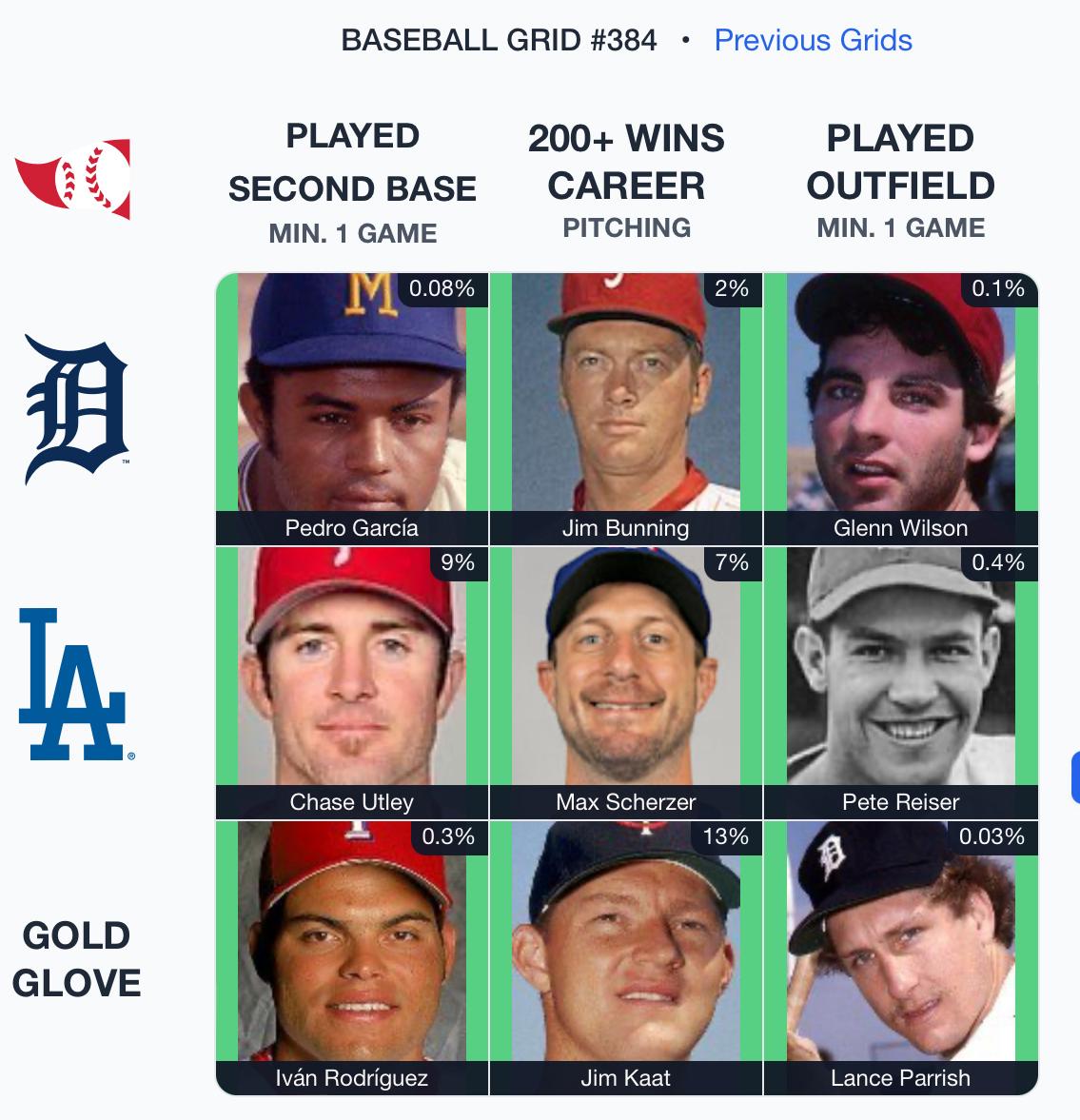
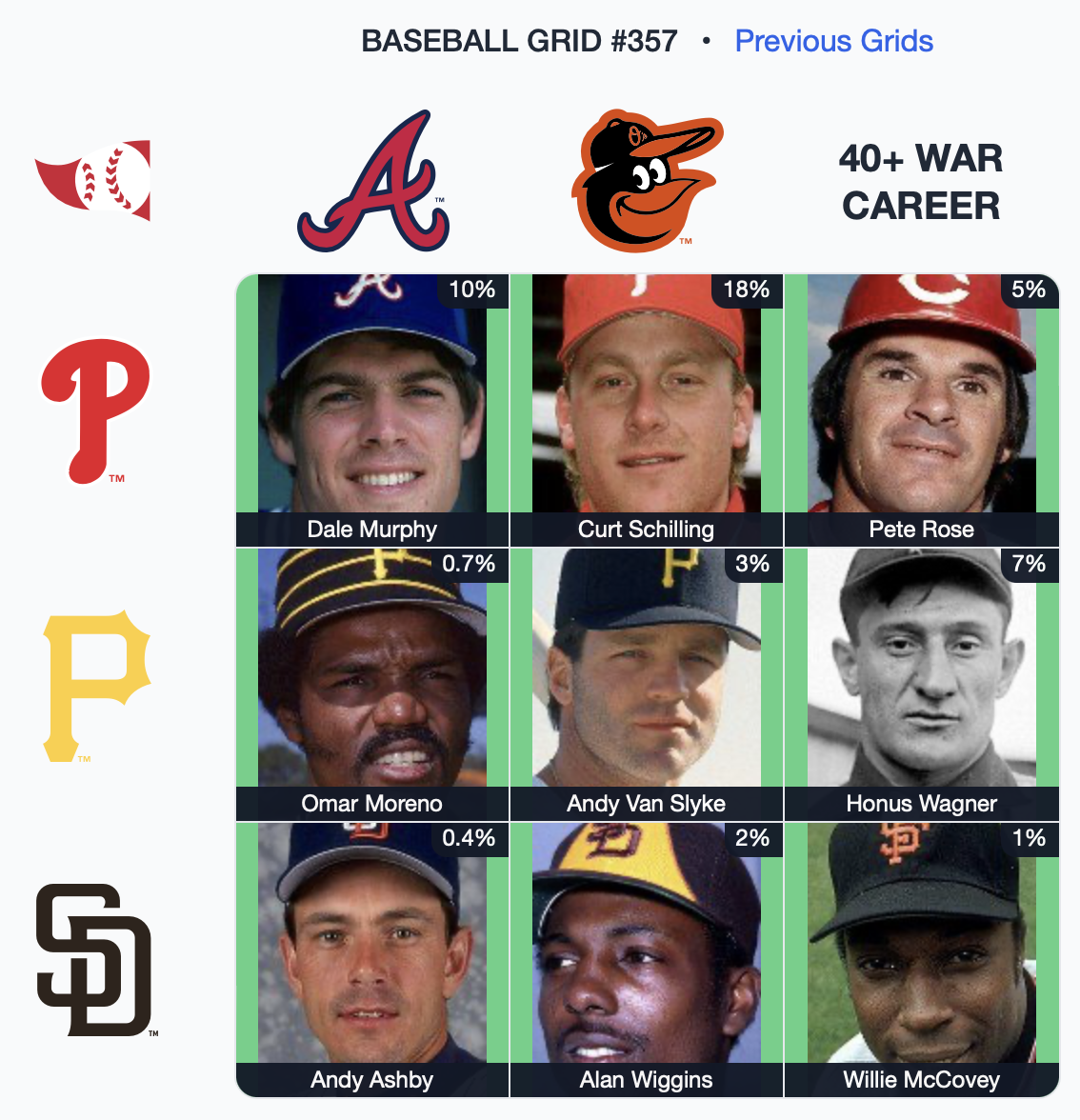
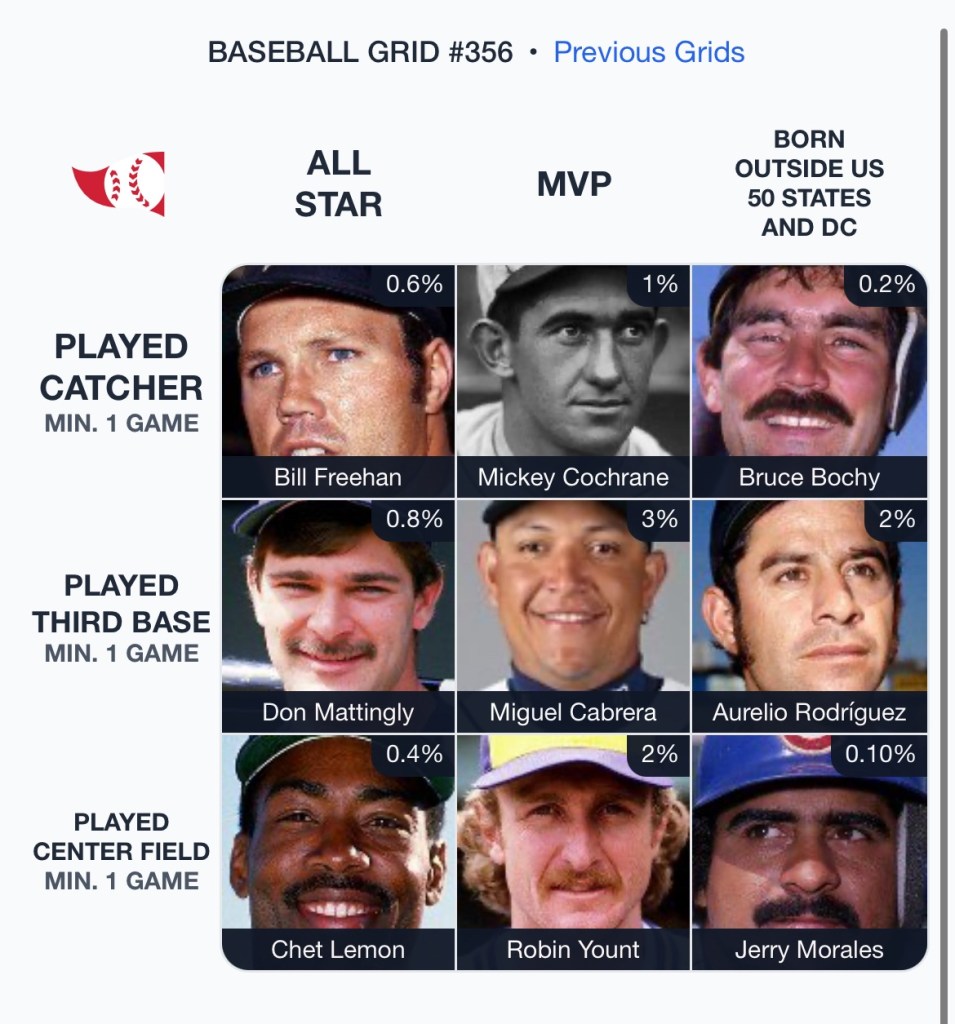
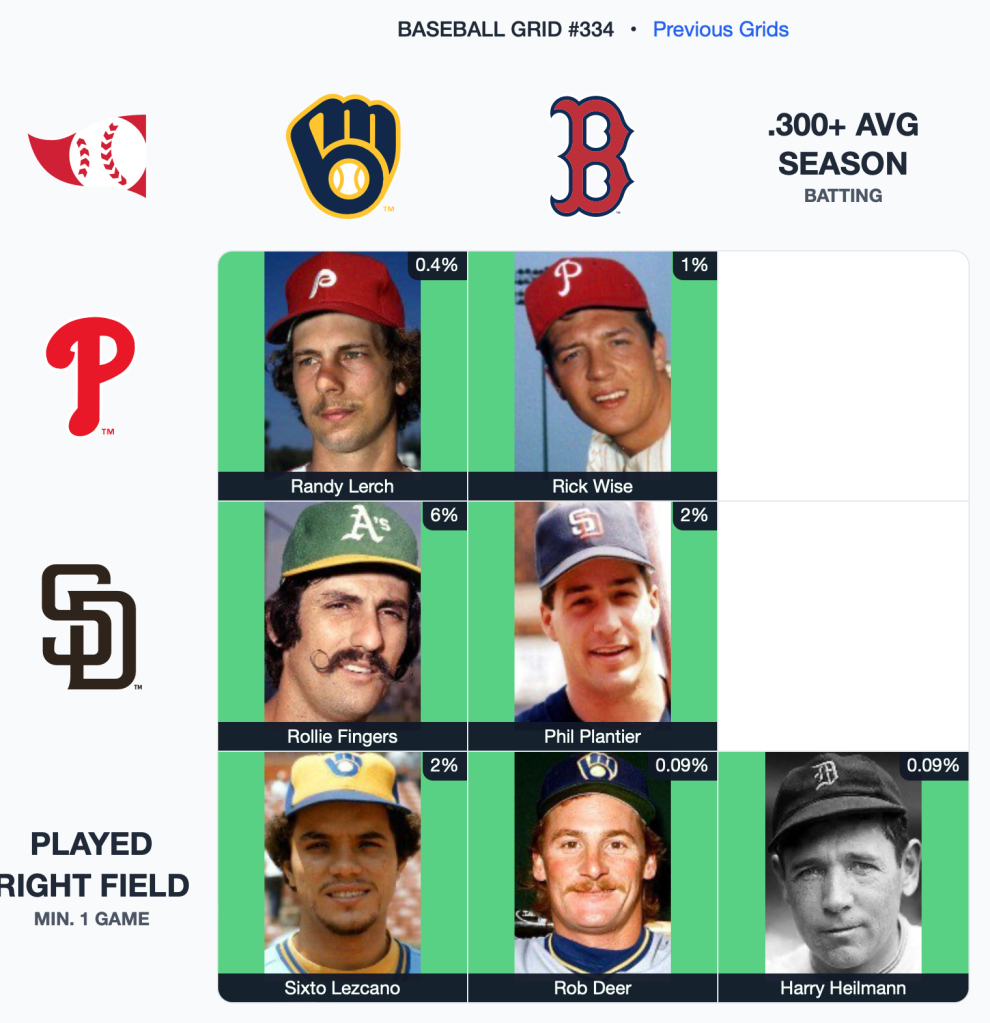
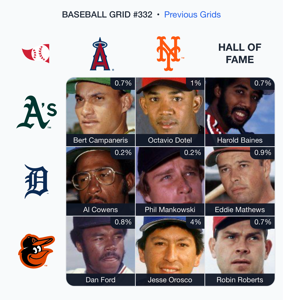
This blog could not exist without Baseball Reference, and the $80 a year for the ad-free subscription is a steal given how much time I spend on the site. I always seem to uncover some delightful tidbit and lately it seems to be the result of post-Immaculate Grid curiosity.
Today’s discovery might be atop the list, if I kept a list.
I sat in the upper-deck bleachers, dead center, for this game with my brother, future brother in law, and my friends (to this day!) Rob and Jeff.
It could not have been a better stage: A warm August Saturday night, a packed house to see Jack Morris face Ron Guidry in a classic 1980s A.L. East showdown with the teams tied for the division lead.
This was the first time in my Tigers fandom that the Tigers were this good, this close to first place, this late in the season — not counting 1981.
The game took place a few days after Yankees right fielder Dave Winfield had dispatched a seagull with a warmup toss at Toronto’s Exhibition Stadium. Those of us in the bleachers tormented him with bird-like arm waving. Top-notch hijinks for a 15 year old.
We went crazy after the game when the scoreboard showed the standings with the Tigers on top by a game. Insanity.
Highlights
The Yankees led 3-2 until the bottom of the seventh when John Wockenfuss launched a homer to left, scoring Larry Herndon, to take a 4-2 lead. (I can still it in my mind, the ball arching in slow motion to left … but now I can’t remember if it was upper or lower deck.)
Glenn Wilson hit a two-run double in the eighth to widen the lead to 6-2.
Morris went the distance, scattering six hits and striking out 12.
According to The New York Times game story by Murray Chass, the loss snapped Guidry’s seven-game Tiger Stadium winning streak. The Tigers had last beaten him in Detroit May 21, 1979, 3-1.
Miscellany
Umpires: HP – Al Clark, 1B – Bill Kunkel, 2B – Richard Shulock, 3B – Derryl Cousins.
In 2011, Tom Gage wrote a piece in The Detroit News about Cabell (the original link to the article is here, but it’s not active for whatever reason) and I was interested to read why Cabell, who hit .311 for the 1983 Tigers, moved on after that season:
He wanted to stay a Tiger, and they weren’t averse to him staying.
“But they wouldn’t give me a raise,” Cabell said Saturday. “I hit .311, played with a knee brace the last two months of that year, and they wouldn’t give me a penny more.
“So I said bye-bye. I was pretty sure the Astros wanted me back, anyway.”
He filed for free agency on Nov. 7, 1983 and I couldn’t believe they let him walk away, especially after a solid ’83 campaign.
Six weeks later, on Dec. 17, 1983, the Tigers signed left-handed hitting Darrell Evans, a much-bigger power threat than the right-handed Cabell.
Who knows how that would have come about if they had re-signed Cabell? A few years later this news broke — and on this date in 1986 — and you have to wonder if this played into the Tigers thinking in the fall of ‘83.
Commissioner Peter Ueberroth gives seven players who were admitted drug users a choice of a year’s suspension without pay or heavy fines and career-long drug testing, along with 100 hours of drug-related community service. Joaquín Andújar, Dale Berra, Enos Cabell, Keith Hernandez, Jeffrey Leonard, Dave Parker, and Lonnie Smith will be fined ten percent of their annual salaries to drug abuse programs. The commissioner also doles out lesser penalties to 14 other players for their use of drugs.
Cabell’s career numbers in Detroit: .284 average, 7 homers, 83 RBI, .682 OPS.



 dailyfungo.com