The Tuesday Fungo: May 14

May 14, 1984: Tigers 7 – Mariners 5

W: Aurelio López (4-0) – L: Ed Vande Berg (2-2) | Boxscore

Record: 27-5

Highlights

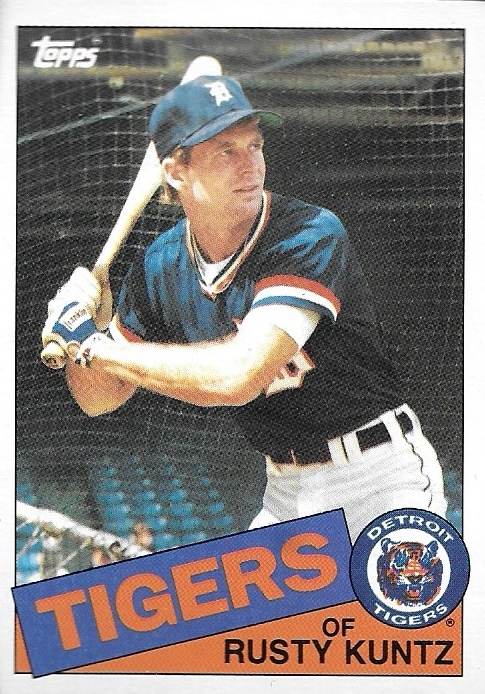
  • Homers for Tram, his fourth, off Ed Vande Berg, in the first inning; and Rusty, his first, also off Vande Berg, in the fourth.

Miscellany

  • Venue: Tiger Stadium
  • Umpires: HP – Bill Kunkel, 1B – Terry Cooney, 2B – Richard Shulock, 3B – Derryl Cousins
  • Time of Game: 3:05
  • Attendance: 18,830

Les Moss #28

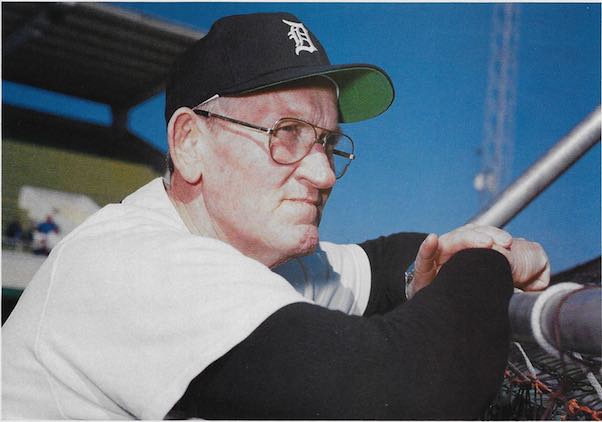
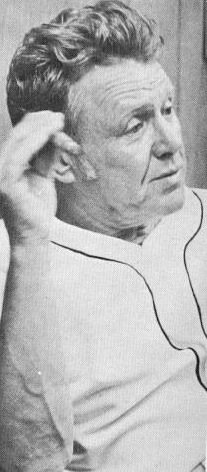
In 1979, John Lester Moss took over for the retired Ralph Houk as Tigers manager. The Tigers finished Houk’s final season at 86-76, and the club seemed ready to make a move in an albeit stacked* American League East.

*Six of the seven teams finished over .500, and three had 90+ wins.

Moss had been in the Tigers farm system managing the Triple-A Evansville Triplets in the American Association and presumably his familiarity with the Tigers’ young core made him a logical choice.

Moss managed the Tigers for just 53 games in ’79. Detroit sat at a 27-26, on the morning of June 14 and before the day over, he was out of a job and Sparky Anderson was the Tigers’ new manager.

As a player, Moss had a 13-year career as a catcher, making his debut in 1946 as a 21-year-old with the St. Louis Browns. He played in just a dozen games that year but finished a .371 average.

Though he didn’t hang around Detroit for very long, Les Moss is another player in the Tigers’ rich history.

Birthdays

Efren Navarro and the late Les Moss

Today’s Grid

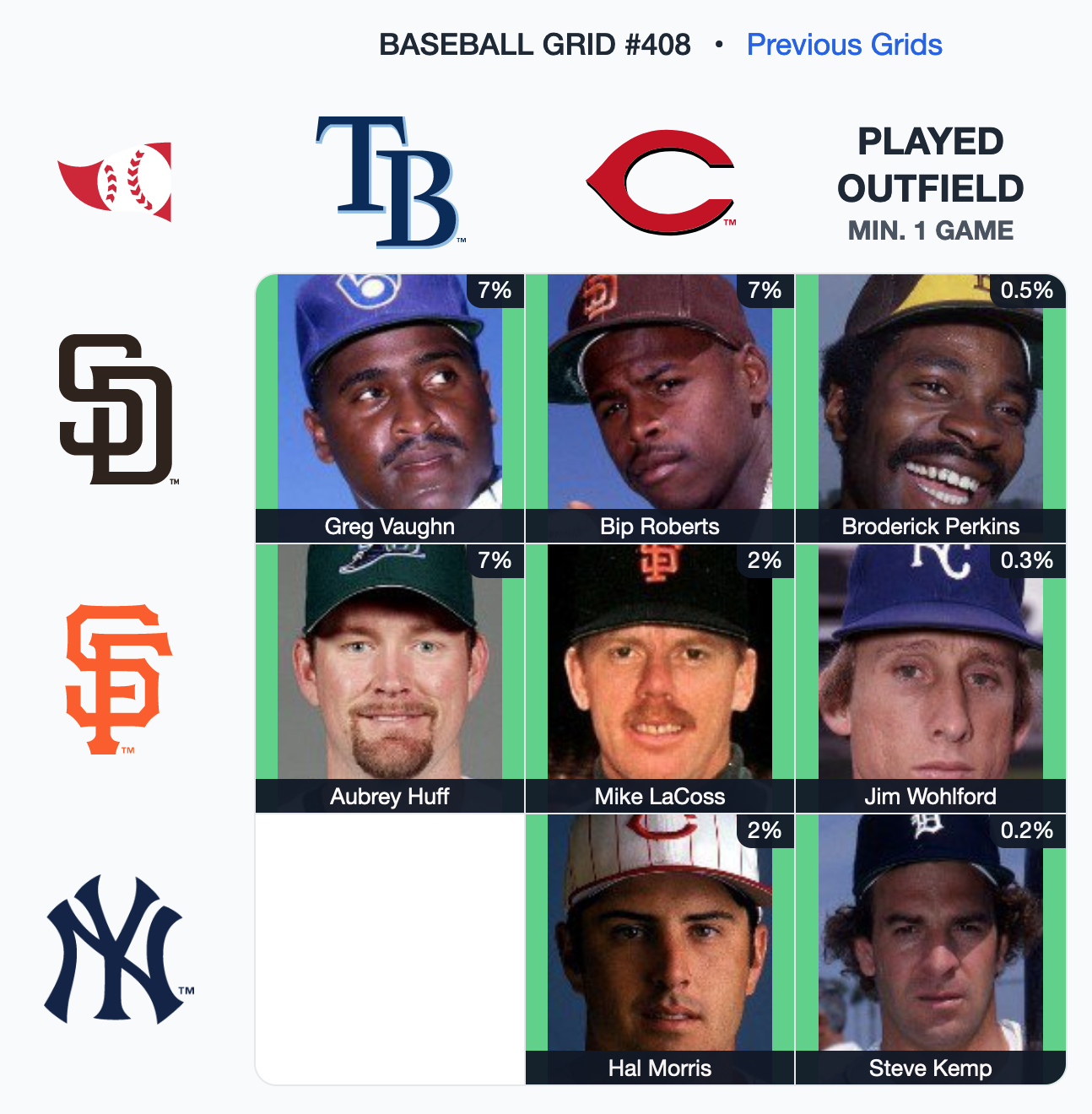
⚾️ Immaculate Grid 408 8/9: Rarity: 124

See you tomorrow.

The Thursday Fungo

Tigers’ Opening Day Record, 1977-1994

The wheelhouse of The Daily Fungo is the Ralph Houk, Les Moss and Sparky Anderson years. So, through that narrow lens in the Tigers’ much broader history, let’s look at how the teams from 1977 through 1994 opened their respective seasons.

* Indicates I was at the game.

YearOpening DayScorePitchers
1977April 7
Home
Boxscore
Royals 7
Tigers 4
W: Paul Splittorff
L: Dave Roberts
Save: Mark Littell
1978April 7
Home
Boxscore
Tigers 6
Blue Jays 2
W: Mark Fidrych
L: Dave Lemanczyk
1979April 7*
Home
Boxscore
Rangers 8
Tigers 2
W: Ferguson Jenkins
L: Dave Rozema
1980April 10
Away
Boxscore
Tigers 5
Royals 1
W: Jack Morris
L: Dennis Leonard
1981April 9*
Home
Boxscore
Tigers 6
Blue Jays 2
W: Jack Morris
L: Joey McLaughlin
1982April 9*
Away
Boxscore
Royals 4
Tigers 2
W: Larry Gura
L: Jack Morris
1983April 5
Away
Boxscore
Tigers 11
Twins 3
W: Jack Morris
L: Brad Havens
1984April 3
Away
Boxscore
Tigers 8
Twins 1
W: Jack Morris
L: Albert Williams
1985April 8
Home
Boxscore
Tigers 5
Indians 4
W: Jack Morris
L: Ernie Camacho
Save: Willie Hernandez
1986April 7*
Home
Boxscore
Tigers 6
Red Sox 5
W: Jack Morris
L: Sammy Stewart
Save: Willie Hernandez
1987April 6*
Home
Boxscore
Yankees 2
Tigers 1
10 innings
W: Dave Righetti
L: Jack Morris
1988April 4
Away
Boxscore
Tigers 5
Red Sox 3
10 innings
W: Jack Morris
L: Lee Smith
Save: Mike Henneman
1989April 4
Away
Rangers 4
Tigers 0
W: Charlie Hough
L: Jack Morris
1990April 9
Away
Boxscore
Red Sox 5
Tigers 2
W: Roger Clemens
L: Jack Morris
Save: Lee Smith
1991April 8
Home
Boxscore
Tigers 6
Yankees 4
W: Paul Gibson
L: Greg Cadaret
Save: Mike Henneman
1992April 6
Home
Boxscore
Blue Jays 4
Tigers 2
W: Jack Morris
L: Bill Gullickson
1993April 5
Away
Boxscore
A’s 9
Tigers 4
W: Bob Welch
L: Mike Moore
Save: Dennis Eckersley
1994April 4
Away
Boxscore
Red Sox 9
Tigers 8
W: Scott Bankhead
L: Storm Davis
Save: Jeff Russell

The result? An even 9 and 9, with Jack Morris notching a 6-4 record — not counting his win against the Tigers on Opening Day 1992 as a member of the Blue Jays.

Birthdays

Craig Paquette and the late Jimmy Barrett

Today’s Grid

⚾️ Immaculate Grid 361 9/9 – Rarity: 69

See you tomorrow.

Ralph Houk: Bridge between Martin and Anderson (and technically Les Moss)

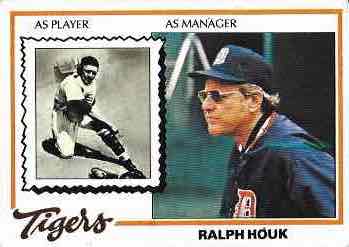
Ralph Houk was the first Tigers manager I ever knew. I paid more attention to the players then – Jason Thompson, Steve Kemp and Aurelio Rodriguez – but I now wish I would have had the attention span to listen to his post-game interviews on Channel 4 or on WJR. I was only nine when baseball appeared on my radar so I’ll have to remember Houk, who died on July 22, 2010, at the age of 90, through the pages of my Tigers Yearbooks and media guides.

Or so I thought.

Thanks to the magic of the Internet, we can piece together Ralph Houk’s arrival in Detroit, where he presided over one of the bleakest periods of baseball in the city’s history, and displayed the least managerial charisma this side of Luis Pujols.

October 1973: Replacing Billy Martin

How bad were the New York Yankees in the early 1970s? Bad enough that their manager left the Bronx for the same job with the Tigers. That might be a stretch, but not by much. The 1973 Tigers finished 85-77, third in the six-team American League East, five games ahead of the 80-82 Yankees. So one could guess that Detroit was actually a step up. It was at least in the view of Ralph Houk, who won 970 games in New York over 10 seasons and was the successor to the legendary Casey Stengel. He would have nowhere near that success with the Tigers.

So, why would he leave New York? According to his obituary in The New York Times, not surprisingly, the reason was The Boss:

In January 1973, a syndicate headed by [George] Steinbrenner bought the team. Under CBS, Houk had a free hand on the field while Lee MacPhail handled the front-office duties. But Steinbrenner let Houk know how he felt things should be done and was overheard making derogatory comments about some of the players.

Houk resigned on the final day of the 1973 season, despite having two years remaining on a contract that paid him in the neighborhood of $75,000 per year. It would be roughly the same amount Tigers GM Jim Campbell would pay him each of the three years on his contract – which at the time made Houk the highest-paid manager in Tigers history.

So what was Houk’s vision when he came to Detroit? To erase “the thin line between losing and winning”, and to rebuild “but not make change for the sake of change.” That’s what he told the AP during his introductory press conference at his Oct. 11, 1973 introductory press conference – at which he was two hours late due to a series of flight delays. (Couldn’t get a direct flight from New York?) “I like the batting power. That’s what always worried me when we played Detroit,” Houk told the UPI.

And he knew of what he spoke: the Tigers trailed only the Indians in 1973 in home runs (157); in 72 they finished third behind Boston and Oakland with 122. Detroit led the league with 179 in 1971.

During his first press conference, Houk also told reporters that he wanted Al Kaline to be his designated hitter in 1974. And Kaline was the Tigers primary DH that season, hitting .262 with 28 doubles, 13 HR, 64 RBI and a .726 OPS in his final season. The mid-1970s didn’t provide Tigers fans much in the way of relevance in the American League East standings. But they weren’t expected to contend. Houk’s job was to develop the Tigers young players and clear the runway for a contender in the 1980s – if not sooner.

Though he was at the helm for one of the most dreadful seasons – 1975, when the club finished 57-102, the fifth-worst season in team history – and one of the most captivating stories of the decade, if not franchise history: Ron LeFlore’s journey from Jackson State Prison to Tiger Stadium.

Houk’s Tigers had nowhere to go but up in 1976 – and they did, winning 17 more games and improving to 74-86. The story in 1976, of course, was Mark Fidrych, who emerged from fringe prospect to national sensation and became the star-attraction on a team filled with journeymen. Fidrych, of course, went 19-9, started the All-Star Game and won the American League Rookie of the Year Award.

Turning the Corner Slowly

It was in 1977 that Houk and the Tigers began introducing fans to the young players that would become the core of the 1984 World Series champions. That season, Alan Trammell, Lou Whitaker, Lance Parrish, Jack Morris and Dan Petry arrived in Detroit to join Kemp and Thompson. The club finished 74-88 in fourth place an improvement over the fifth-place finish in 76 but not really. The expansion Blue Jays joined the American League East that season serving as the rising tide to lift every team in the standings.The Tigers seemed to turn the corner in 1978, finishing with their best record under Houk, 86-76, but dropped to fifth place.

“It’s time for me to go fishing.”

On Sept. 21, 1978, Houk surprised the Tigers when he announced his retirement at the end of the season. The 59-year-old Kansas native wanted to spend his summers at the fishing hole, but on the way out he wanted to stick it to the media, whom he saw as never giving him a fair shake in Detroit.

“The pressure of you people, the press that’s been the toughest thing,” he told the AP when he announced his retirement. Then with a laugh he added, “You can’t slap writers any more. You can’t punch them. You can’t do anything. A lot has changed.”

“I’ve been treated so great here,” Houk was quoted by the UPI. “It’s been an interesting job but the only way I could have stayed here five years was my associations with Mr. Campbell and Mr. Fetzer.” “Truthfully, I did not intend to stay here this long,” Houk said. “It’s been gratifying to me to see some of the young players we have stuck with develop.” Check this out from the same UPI story:

Houk, 59, originally signed a three-year contract to manage the Tigers but it was replaced after 1976 with a unique self-renewing agreement that raised his pay above the average of his contemporaries and provided for additional attendance and club performance bonuses.

It also had a built-in year of severance pay should the contract be terminated by either side. Campbell had said repeatedly Houk could manage the Tigers for as long as he wanted.

Performance bonuses? Attendance clauses? And for all these years we thought the Tigers brass was living in the 1920s. Knowing Campbell’s cheapskate reputation, I’d guess those attendance bonuses were unattainable given the quality of the ball club.

All told, Houk’s Tigers teams won 363 games and lost 443 from 1974-78. Hardly outstanding but probably right in line with what Campbell expected when he hired him.

The Tigers named Les Moss, then the manager of their Triple-A Evansville club, to replace Houk for the 1979 season. As we know, that experiment lasted all of 53 games before the Tigers cut him loose in favor of Sparky Anderson.

Houk returned to the dugout in 1981 as manager of the Red Sox, a job he held until 1984. I remember thinking at the time that it had to be strange for Houk to be back at Tiger Stadium in ’84 watching many of his former players steamroll their way to the World Series. Or gratifying … or both.

By most accounts, Ralph Houk wasn’t a warm human being, particularly with the press, but he was probably the ideal man for the job. And that job was to bridge the gap between the 1968 champions and the next generation of Tigers, the guys who won the World Series in 1984. He’ll never have the legacy of his successor, Sparky Anderson, but Ralph Houk’s place in Tigers history is an important one – if often forgotten.

Remembering Ralph Houk

Ralph Houk was the first Tigers manager I ever knew.

I paid more attention to the players then — Jason Thompson, Steve Kemp and Aurelio Rodriguez — but I now wish I would have had the attention span to listen to his post-game interviews on Channel 4 or on WJR

Alas, I was only nine when baseball appeared on my radar so I’ll have to remember Houk, who died on July 22 at the age of 90, through the pages of my Tigers Yearbooks and media guides.

Or so I thought.

Thanks to the magic of the Internet, we can piece together Ralph Houk’s arrival in Detroit, where he presided over one of the bleakest periods of baseball in the city’s history, and displayed the least managerial charisma this side of Luis Pujols.

October 1973: Replacing Billy Martin

How bad were the New York Yankees in the early 1970s? Bad enough that their manager left the Bronx for the same job with the Tigers. That might be a stretch, but not by much.

The 1973 Tigers finished 85-77, third in the six-team American League East, five games ahead of the 80-82 Yankees. So one could guess that Detroit was actually an upgrade. It was at least in the view of Houk, who won 970 games in New York over 10 seasons and was the successor to the legendary Casey Stengel.

He would have nowhere near that success with the Tigers. So, why would he leave New York? According to his obituary in The New York Times, not surprisingly, the reason was The Boss:

In January 1973, a syndicate headed by [George] Steinbrenner bought the team. Under CBS, Houk had a free hand on the field while Lee MacPhail handled the front-office duties. But Steinbrenner let Houk know how he felt things should be done and was overheard making derogatory comments about some of the players.

Houk resigned on the final day of the 1973 season, despite having two years remaining on a contract that paid him in the neighborhood of $75,000 per year. It would be roughly the same amount Tigers GM Jim Campbell would pay him each of the three years on his contract — which at the time made Houk the highest-paid manager in Tigers history.

[callout title=A Bumpy Road to Detroit]Ralph Houk joined the Tigers shortly after resigning as manager of the Yankees. But it wasn’t that simple thanks to new Yankees owner George Steinbrenner and the owner of the Oakland A’s, Charlie Finley.

The Yankees wanted to hire A’s manager Dick Williams, even though he was still under contract with Finley.

No bother.

The Yankees hired him anyway. Of course, Finley raised hell and demanded the Yankees compensate his club with a player or two. Then, the Yankees asked American League President Joe Cronin to require the Tigers to compensate them for hiring Houk.

In the end, Williams didn’t manage the Yankees, the Tigers didn’t owe them anything, and they ended up hiring Bill Virdon — who held the job for a season and a half until Billy Martin, whose firing in Detroit started this whole mess, was hired by Steinbrenner. Finley wound up hiring Alvin Dark to manage the A’s in 1974.
[/callout]

So what was Houk’s vision when he came to Detroit? To erase “the thin line between losing and winning”, and to rebuild “but not make change for the sake of change.”

That’s what he told the AP during his introductory press conference at his Oct. 11, 1973 introductory press conference — at which he was two hours late due to a series of flight delays. (Couldn’t get a direct flight from New York?)

“I like the batting power. That’s what always worried me when we played Detroit,” Houk told the UPI. And he knew of what he spoke: the Tigers trailed only the Indians in 1973 in home runs (157); in ’72 they finished third behind Boston and Oakland with 122. Detroit led the league with 179 in 1971.

During his first press conference, Houk also told reporters that he wanted Al Kaline to be his designated hitter in 1974. And Kaline was the Tigers’ primary DH that season, hitting .262 with 28 doubles, 13 HR, 64 RBI and a .726 OPS in his final season.

The mid-1970s didn’t provide Tigers fans much in the way of relevance in the American League East standings. But they weren’t expected to contend. Houk’s job was to develop the Tigers’ young players and clear the runway for a contender in the 1980s — if not sooner.

Though he was at the helm for one of the most dreadful seasons — 1975, when the club finished 57-102, the fifth-worst season in team history — and one of the most captivating stories of the decade, if not franchise history: Ron LeFlore’s journey from Jackson State Prison to Tiger Stadium.

Houk’s Tigers had nowhere to go but up in 1976 — and they did, winning 17 more games and improving to 74-86.

The story in 1976 was Mark Fidrych, a gangly right-handed pitcher, who emerged from fringe prospect to national sensation and became the star-attraction on a team filled with journeymen. Fidrych went 19-9, started the All-Star Game and won the American League Rookie of the Year Award.

Turning the Corner … Slowly

It was in 1977 that Houk and the Tigers began introducing fans to the young players that would become the core of the 1984 World Series champions. That season, Alan Trammell, Lou Whitaker, Lance Parrish, Jack Morris and Dan Petry arrived in Detroit to join Steve Kemp and Thompson.

The club finished 74-88 in fourth place – an improvement over the fifth-place finish in ’76 … but not really. The expansion Blue Jays joined the American League East that season and, by comparison, every team got better.

The Tigers seemed to turn the corner in 1978, finishing with their best record under Houk, 86-76, but dropped to fifth place.

“It’s time for me to go fishing.”

On Sept. 21, 1978, Houk surprised the Tigers when he announced his retirement at the end of the season. The 59-year-old Kansas native wanted to spend his summers at the fishing hole, but on the way out he wanted to stick it to the media, whom he saw as never giving him a fair shake in Detroit.

“The pressure of you people, the press … that’s been the toughest thing,” he told the AP when he announced his retirement. Then with a laugh he added, “You can’t slap writers any more. You can’t punch them. You can’t do anything. A lot has changed.”

“I’ve been treated so great here,” Houk was quoted by the UPI. “It’s been an interesting job but the only way I could have stayed here five years was my associations with Mr. Campbell and Mr. Fetzer.”

“Truthfully, I did not intend to stay here this long,” Houk said. “It’s been gratifying to me to see some of the young players we have stuck with develop.”

Check this out from the same UPI story:

Houk, 59, originally signed a three-year contract to manage the Tigers but it was replaced after 1976 with a unique self-renewing agreement that raised his pay above the average of his contemporaries and provided for additional attendance and club performance bonuses.

It also had a built-in year of severance pay should the contract be terminated by either side. Campbell had said repeatedly Houk could manage the Tigers for as long as he wanted.

Performance bonuses? Attendance clauses? And for all these years we thought the Tigers’ brass was living in the 1920s. Knowing Campbell’s reputation for employing skinflint tendencies, I’d guess those attendance bonuses were
unattainable given the quality of the ball club.

All told, Houk’s Tigers teams won 363 games and lost 443 from 1974-78. Hardly outstanding but probably right in line with what Campbell expected when he hired him.

The Tigers named Les Moss, then the manager of their Triple-A Evansville club, to replace Houk for the 1979 season.

As we know, that experiment lasted all of 53 games before the Tigers cut him loose in favor of Sparky Anderson.

Houk returned to the dugout in 1981 as manager of the Red Sox, a job he held until 1984. I remember thinking at the time that it had to be strange for Houk to be back at Tiger Stadium in ’84 watching many of his former players steamroll their way to the World Series. Or gratifying … or both.

By most accounts, Ralph Houk wasn’t a warm human being, particularly with the press, but he was probably the ideal man for the job. And that job was to bridge the gap between the 1968 champions and the next generation of Tigers, the guys who won the World Series in 1984.

He’ll never have the legacy of his successor, Sparky Anderson, but Ralph Houk’s place in Tigers history is an important one — if often forgotten.

Remembering the Les Moss Era

When you search for “raw deal” on Google, the first entry is for the 1986 film by the same name starring Arnold Schwarzenegger, Kathryn Harrold and Darren McGavin.

Twenty-nine years ago Les Moss got a raw deal in his second big-league managing job.

Yes, second. He managed the 1968 White Sox for just 36 games, going 12-24.

In 1979, John Lester Moss took over for the retired Ralph Houk as Tigers manager. Moss had been in the Tigers farm system managing the Triple-A Evansville (Ind.) Triplets in the American Association and it was, I guess, his turn.

Moss managed the Tigers for just 53 games in ’79. Detroit sat at a 27-26, on the morning of June 14. Before Moss could order lunch, he was out of a job and Sparky Anderson was the Tigers’ new manager. (Officially, first base coach Dick Tracewski was the interim manager. Trixie led the Tigers to a 2-0 record before Sparky took over.)

So the Moss Era was over before it even began. The managing era, that is.

Did you know that Les Moss had a 13-year career as a catcher in the majors? He debuted in 1946 as a 21-year-old with the St. Louis Browns. He played in just a dozen games that year but finished a .371 average.

A review of his year-by-year stats show one thing: he was ridiculously inconsistent. For example:

  • 1947: 96 games, .157 avg.
  • 1948: 107/.257
  • 1949: 97/.291
  • 1950: 84/.266
  • 1951: 87/.193

…and so on. What else?

  • He never hit more than 14 homers in a season
  • His career average was .247; career OBP: .333

Though he didn’t hang around Detroit for very long, Les Moss is another player in the Tigers’ rich history.

Today the Tulsa native turns 83.

**Update: Moss passed away Aug. 29, 2012.