After losing two of three to the Blue Jays, the Tigers travel to visit another A.L. East rival, the Brewers, for a three-game weekend set at County Stadium.
Record: 44-16 — 6 games up on Toronto
So here’s another June 14 game. This one from 1978:
Record: 31-27 — Fifth place, 91/2 games back of Boston
Highlights
The Tigers scratched out just four hits off of Splittorf who threw a complete-game gem.
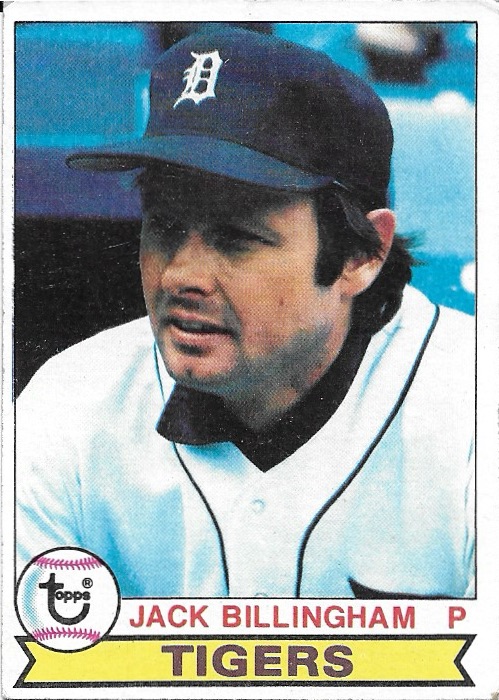
Billingham was roughed up for eight hits and four walks in six innings, and allowed five earned runs.
Mickey Stanley‘s fifth-inning homer was the Tigers highlight.
Miscellany
Venue: Royals Stadium
Umpires: HP – Dave Phillips, 1B – Larry McCoy, 2B – Steve Palermo, 3B – Don Denkinger
Time of Game: 2:05
Attendance: 21,025
Mike Laga – 1B #4
The first paragraph of the 1984 Tigers Yearbook profile on Mike Laga pretty much summed it up:
“Mike Laga has been called the Tiger first baseman of the future. And despite the presence of a veteran star like Darrell Evans, it seems clear the Tigers still have high hopes for Laga.”
I’d go so far as to say we still have high hopes for Laga.
We heard so much about the left-handed hitting slugger but he didn’t capitalize on his brief visits to Detroit from 1982 through 1986 — and as I recall, injuries were a problem.
1982: Laga made his debut on Sept. 1, 1982 against the Angels and faced Ken Forsch, flying out to left. Two days later he hit his first homer, a two-run shot, off the A’s Rick Langford. He played in 27 games for ’82 Tigers, essentially the starting first baseman in September.
1983: The bulk of his season was spent in Evansville with a dozen games in Detroit: 21 at bats, no homers, .190 average.
1984: Laga again was a September call up but appeared just nine games: but he hit .545 — six for 11.
1985: Another nine-game stint. Thirty six at bats, two home runs, .167 average.
1986: Laga made the Opening Day roster and appeared in 33 games before being sent to Nashville. The Tigers traded him to the Cardinals, as a player to be named later, along with Ken Hill for catcher Mike Heath.
His final numbers with Detroit: 72 games, .239 avg., eight home runs, 28 RBI and a .691 OPS.
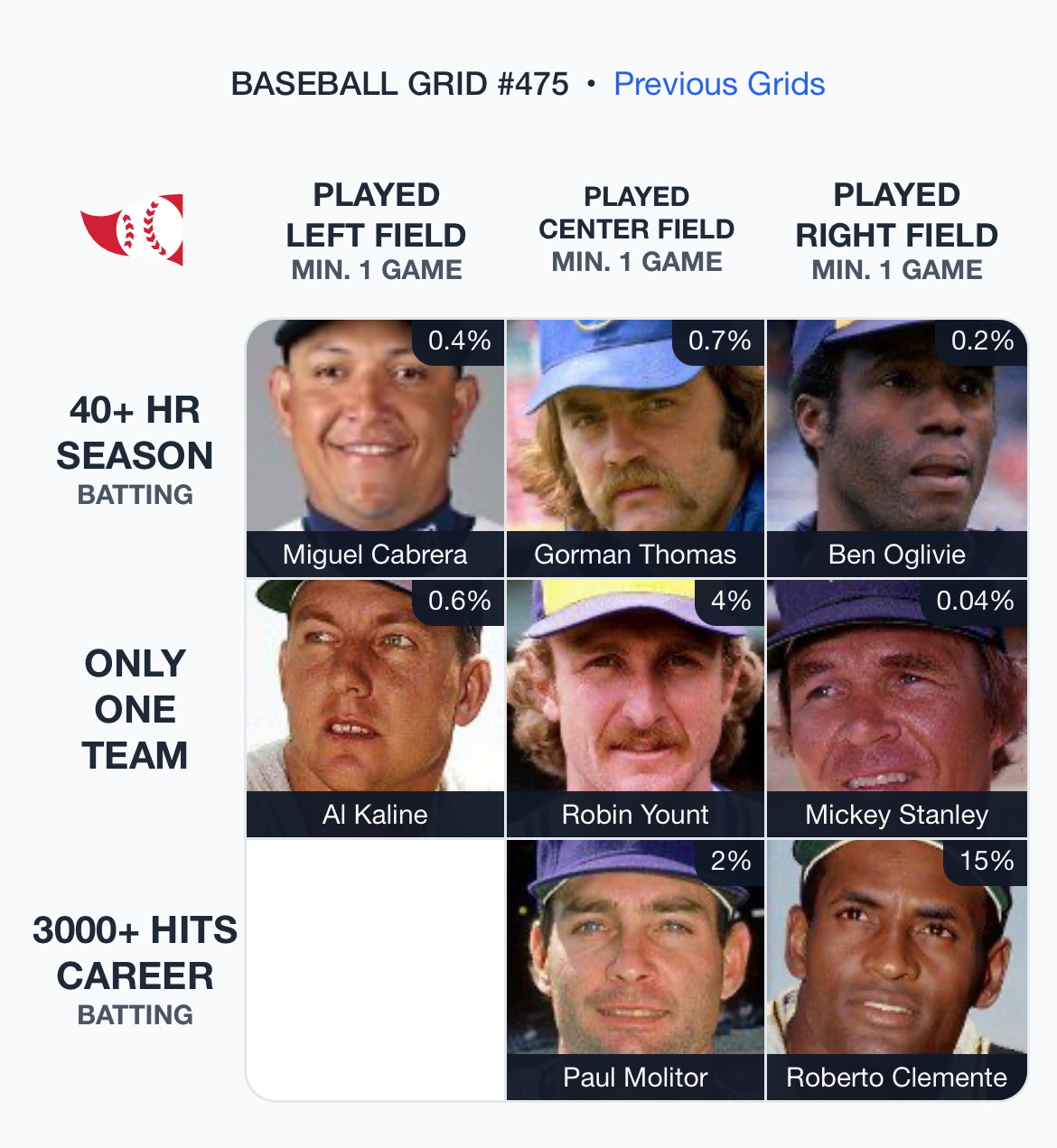
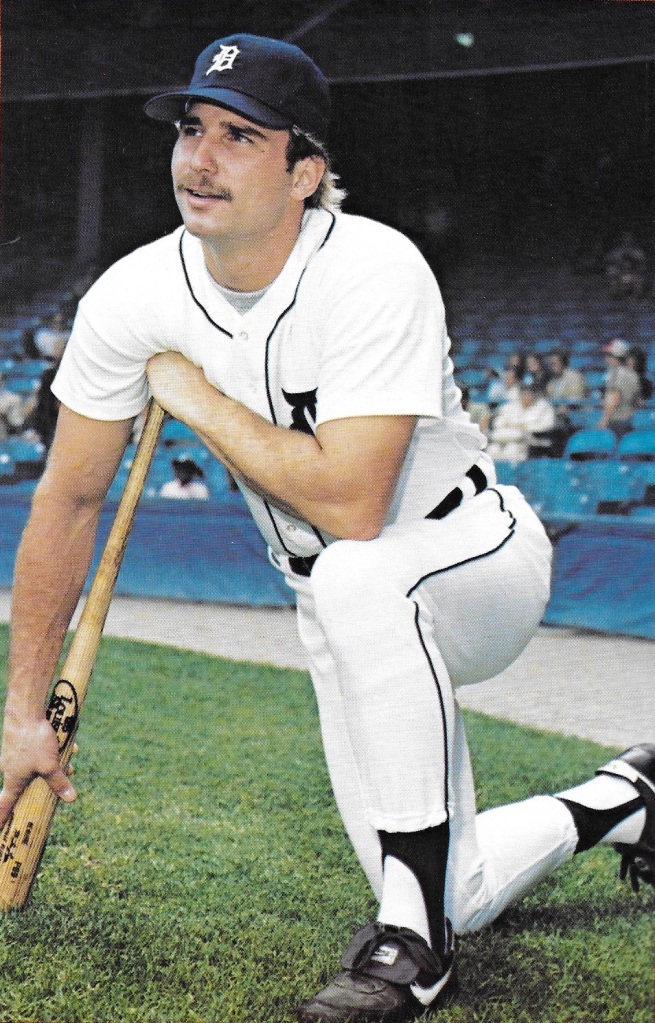
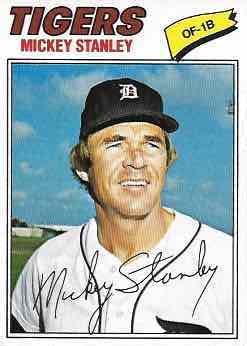
For many fans, Mickey Stanley’s defining moment with the Tigers came in the 1968 World Series when manager Mayo Smith shifted him from the outfield to shortstop — a position he’d played only in nine major-league games.
The move was made specifically to keep Al Kaline in the lineup while adding some pop to the ’68 team’s woeful production at shortstop. Ray Oyler played most at short that year (111 games) but hit just .135, while backups Tom Matchick and Dick Tracewskicombined hit .180 (!).
In his terrific bio on Stanley, which appears in the 2008 book Sock It to ‘Em Tigers, Jerry Nechal sums up the new shortstop’s performance in the Series against the Cardinals:
Obviously a quick learner, Stanley went on to amaze the baseball world in the Series. In the first inning of Game 1 he was tested by a leadoff ground ball off the bat of the speedy Lou Brock. Brock was out on a close play and Mickey’s fielding at shortstop became a nonfactor. He successfully handled 30 of 32 chances, making two inconsequential errors.
Mickey Stanley broke in with the Tigers on Sept. 13, 1964, singling in his first at bat off Claude Osteen, and appeared in just four games that season. He played in 30 games the following season before making the big club out of Spring Training in 1966, and soon became a fixture in centerfield for the Tigers until a speedy rookie Ron LeFlore took over in the mid-’70s.
My greatest memory of Stanley comes from Aug. 10, 1977, the first Tigers game I ever attended.
The starting pitcher for the Tigers was rookie Jack Morris who would pitch 7.2 innings on the way to his first major-league win, but he wouldn’t have gotten the win that night without a dazzling play by Stanley with two out in the ninth inning.
With Von Joshua at first, Cecil Cooper stood at the plate as the potential tying run. He launched a pitch from Steve Foucault deep to right field and from my lower deck seats on the first base side, it looked like it would indeed tie the game. Instead, Stanley timed his jump and took away a home run, securing a 5-3 win for the Tigers — and Morris.
And it took no time for me to decide who my favorite Tigers were.
Mickey Stanley retired after the 1978 season, his 15th, after playing in 1,516 games — all with the Tigers.
As I told my pal Doug, add 100 to my rarity score because. out of frustration, I looked at the 1977 Mariners roster to see who I remembered as a Cardinal. For kicks, I dropped him in to see how rare it was — rare!
Avila’s never played third in the majors but he’s not the first Tigers player to be pressed into action there. Did you know that Al Kaline appeared in two games at third during his career?
In 1961, he played a full nine innings at third, fielding a pair of chances cleanly, with a putout and an assist. Four years later he played 5.1 innings of a game with three chances, two putouts and an assist.
Johnny Wockenfuss, who played mostly at first, catcher and in the outfield, became even more of a utility man for Sparky Anderson when he played … parts of two games – all of 2.1 innings – at third base but never saw any action.
Like Kaline, in 1965 Willie Horton played third but outlasted him be two-thirds of an inning. In one game he played six innings, fielded two chances and earned an assist on both.
Others taking a turn at the hot corner include:
Mickey Stanley: 18 games over two seasons (1975 and ’76), 61 chances, 13 putouts, 46 assists and two errors
Alan Trammell: 43 games in two seasons (1993, ’96), 100 chances, 26 putouts, 69 assists, five errors
Ty Cobb: 1 game in 1918, two chances, with an assist and a putout.
Charlie Gehringer: 6 error-free games (and 26 chances) in 1926 for The Mechanical Man
I’m looking forward to this experiment. Having Avila’s bat in the lineup is huge and having him at third, well, can’t be any worse than Ryan Raburn.
Acquired: Signed by the Tigers as an amateur free agent in 1961
Seasons in Detroit: 15 (1964-78)
Uniform Numbers: 49, 24
Stats: .248 avg., 117 HR, 500 RBI, .675 OPS
Awards: 4 Gold Gloves (1968-70, 1973)
For many fans, Mickey Stanley’s defining moment with the Tigers came in the 1968 World Series when manager Mayo Smith shifted him from the outfield to shortstop — a position he’d played only in nine major-league games.
The move was made specifically to keep Al Kaline in the lineup while adding some pop to the ’68 team’s woeful production at shortstop. Ray Oyler played most at short that year (111 games) but hit just .135, while backups Tom Matchick and Dick Tracewskicombined hit an anemic .180.
In his terrific bio on Stanley, which appears in the 2008 book Sock It to ‘Em Tigers, Jerry Nechal sums up the new shortstop’s performance in the Series against the Cardinals:
Obviously a quick learner, Stanley went on to amaze the baseball world in the Series. In the first inning of Game 1 he was tested by a leadoff ground ball off the bat of the speedy Lou Brock. Brock was out on a close play and Mickey’s fielding at shortstop became a nonfactor. He successfully handled 30 of 32 chances, making two inconsequential errors.
Mickey Stanley broke in with the Tigers on September 13, 1964, singling in his first at bat off Claude Osteen, and appeared in just four games that season. He played in 30 games the following season before making the big club out of Spring Training in 1966, and soon became a fixture in centerfield for the Tigers until a speedy rookie Ron LeFlore took over in the mid-’70s.
My greatest memory of Stanley comes from Aug. 10, 1977, the first Tigers game I ever attended. The starting pitcher for the Tigers was rookie Jack Morris who would pitch 7.2 innings on the way to his first major-league win, but he wouldn’t have gotten the win that night without a dazzling play by Mickey Stanley with two out in the ninth inning.
With Von Joshua at first, Cecil Cooper stood at the plate as the potential tying run. He launched a pitch from Steve Foucault deep to right field and from my lower deck seats on the first base side, it looked like it would indeed tie the game. Instead, Stanley timed his jump and took away a home run, securing a 5-3 win for the Tigers — and Morris.
And it took no time for me to decide who my favorite Tigers were.
Mickey Stanley retired after the 1978 season, his 15th, after playing in 1,516 games — all with the Tigers. According to Nechal’s biography, today Stanley lives in the Brighton, Mich., area.
I can’t explain why I don’t: (a) Own a copy of Ron LeFlore‘s autobiography (with Jim Hawkins) or (b) Own the CBS TV movie on DVD.
Thanks to eBay, I can get the book. The movie is proving to be a tougher find — at least in tangible form. Thanks to YouTube we can enjoy clips from the 1978 epic.
A few things to point out: the bush-league replica Tigers jerseys worn by nearly afro’d “Mickey Stanley“, Jim Northrup‘s silver hair
(we’re supposed to believe he was a current-day player?), and Norm Cash’s un-sculpted build.
Also, check out the mix of old-school dark green paint with the blue that replaced it.


 For many fans,
  dailyfungo.com